
The 72 huge round basins scattered across the equator are evidence of the Albertine Rift’s bubbling volcanic past.
The 27km drive between the Kabatoro gate and Queen’s Pavillion takes visitors past this peculiar landscape, taking in sights such as the attractive Lake Kitagata, the huge Kyemengo crater, sweeping views of the Rift Valley escarpment and the Kazinga channel, all in front of the mighty backdrop of the Rwenzori Mountains.
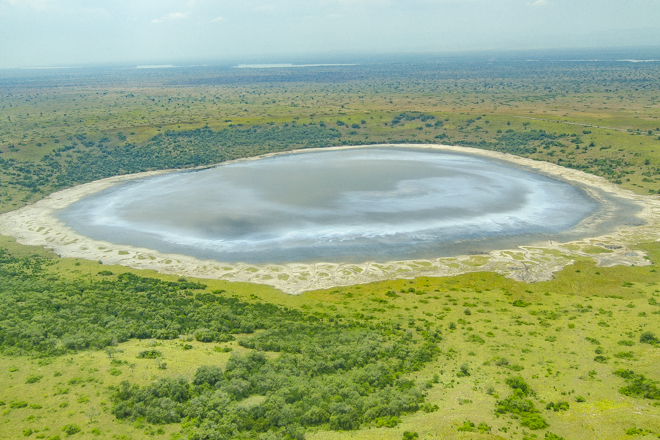 The drive is a must-see for those with a 4×4 vehicle who wish to explore a less-traveled section of the park, and for those with a particular interest in the fascinating geological history of Africa’s Rift Valley.
Queen Elizabeth National Park is ranked as Uganda’s second largest national Park as well as the United Nations Educational Scientific Cultural Organization because of its remarkable ecological system.
The Park is located in districts of Rubirizi, Rukungiri, and Kamwenge along the Congolese border to the north of Kasese and the Rwenzori foot hills to the east by lake George.
Queen Elizabeth National Park is a home to wide range of animals including the big four, primate species like chimpanzee, monkeys and almost 600 bird species call it a home
Amazingly this park consists of wide number of crater lakes that were formed as a result of volcanic activity that occurred approximately 10,000 years ago this formation creates a caldera that fills with water with time.
These are some examples of the craters Lake Nyamusingire, Lake Katwe crater explosion, Bunyaruguru crater, Nyamuka crater in this article more information is clarified about these stunning features.
Nyamusingire Lake
This stunning crater lake is situated in Rubirizi district in the western part of Uganda some people call it Lake Nyamisigeri or Lake Niamsigeri The lake has an elevation of almost 1,010 meters the nearby village at this site include Kyanika and Ndangara.
Lake Nyamusungire biodiversity system is endowed with numerous lush flora species and Fauna species that are acting as tourist attraction
The common activities carried out on Lake Nyamusingire include bird watching guided nature walks, canoe ride among others these activities rewards guests with chances to spot at numerous animal species and bird species around the lake.
Lake Katwe Exploration Crater
This crater is also known as Katwe- kikorongo Explosion crater ranked as the largest and the oldest crater lake around it is nestled in the outskirt of Queen Elizabeth National Park almost twenty-seven kilometers covers an area of almost 200 kilometers squares in size with the length of approximately 3 kilometers and depth of over 110m.
This crater is a mixed blend of nature and cultural experience this is witnessed by the wide variety of activities offered at this place including salt mining where guests learn more about the traditional salt extraction methods, photography, cultural tours among others.
Bunyarunguru Craters
This hidden gem is also known as Kichwamba crater field nestled at the rim of Kichwamba Escarpments in Queen Elizabeth National Park western rift valley. The notable lakes in this area include twin lakes of Kamweru and Kyema as well as Nkugute crater lake.
These craters lakes ecology system consist of both saline and fresh waters gifted with lush vegetation species.
While at this site tourists engage in to various activities such as swimming because its waters are free from bilharzia disease, also a great place for sports fishing birdwatching, photography, guided nature walks, cycling and many more.
Ndali -Kasenda Craters
Ndali-Kasenda Crater is a place of safety to many craters’ lakes namely Lake Nyabikere, Lake Kifuruka, Lake Nkuruba, Lake Nyanswingwa, Lake Mubiro, Lake Ntambi, Lake Nyamusagani, Lake Ntambi, among others.
Tourists can fully explore these lakes on a guided nature walk experience by walking on foot sighting at the natural beautiful sceneries also cycling activiy can be enjoyed from here.
The other notable activities offered at this ground include bird watching, community vists, fishing among other Ndali Kasenda is an ideal stop over to or from Queen Elizabeth National Park.
Best Time to Visit these, Crater Lakes.
These lakes can be visited throughout the year however mostly good when visited during the dry season of the year that run from December to February and from June to August. During these periods the weather is more favorable for outdoor activities such as fishing, canoeing, nature walk to mention but a few
Another option is during the rainy season that usually happens in the months of late March to early May during this period most of the trailheads and roads are muddy and slippery so reaching these crater lakes it is somehow challenging.
Tourists are advised to make use of 4×4 wheel drive tourist’s vehicle because most roads are in bad state in order to avoid any inconvenience on the way.